
Click here to watch Save Mount Kenya video
Save Mount Kenya Forest from Extinction Group
Through partnership between our organization and Global Biodiversity Protection, more community members will be involved with tree planting project and complete protection of Mount Kenya and Mau Forest. It will open Mount Kenya and Mau to outside world as one of the best tourist sites and encourage more visitors to this area to participate in ecotourism projects and see this UNESCO World Natural Heritage.
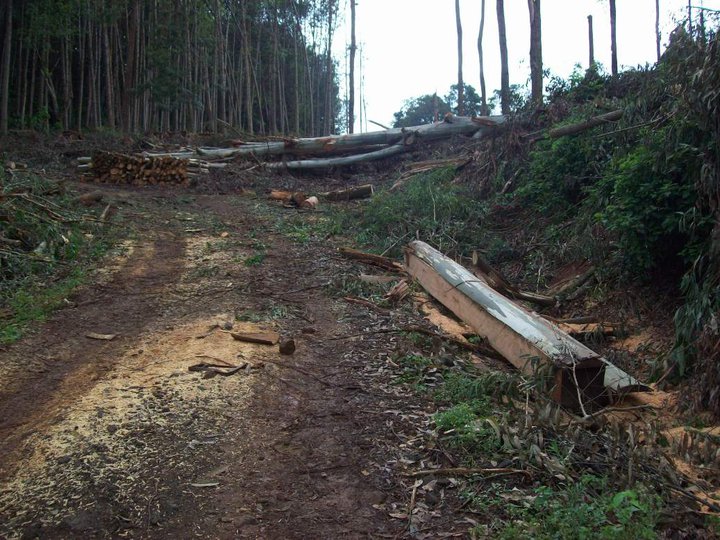
Massive destruction of Mau forest going on.
What is Mau Forest and Mount Kenya ?
Mau Forest is a forest complex in the Rift Valley of Kenya. It is the largest indigenous montane forest in East Africa. The Mau Forest complex has an area of 273,300 hectares (675,000 acres). The forest area has some of the highest rainfall rates in Kenya . Mau Forest is the largest water catchment area in Kenya . Numerous rivers originate from the forest, including Ewaso Ng’iro River (southern), Sondu River, Mara River and Njoro River. These rivers feed Lake Victoria, Lake Nakuru and Lake Natron . Westerns slopes of the Mau Escarpment are covered by Mau Forest
The country is feeling economic and environmental pinch of the continued degradation of the great ecosystem through activities such as illegal logging, excisions and encroachments. Recently the government cancelled the commissioning of the 60MW Sondu Miriu hydroelectricity project because the water levels in the holding dam had drastically reduced. The rationale was that river Sondu that feeds the dam originates from Mau forest which is currently under threat from human activities.
Destruction The Mau has been a victim of destruction for many years. More than 45 bird species and 2,000 families live here. The latter, including logging and charcoal burning, has put to risk an asset base worth more than $300 million (more than Sh20 billion). The forest has been traditionally inhabited by Ogiek people, whose hunter-gatherer lifestyle is sustainable . However, due to immigration from of other ethnic groups, parts of the forest area have been cleared for settlement. In 2008, the inauguration of the Sondu-Miriu hydro power plant was postponed due to low water levels, that are said to be resulting from the destruction of Mau Forest . The forest is under trust land, managed by the County Council of Narok, one of the richest local authorities in the country. Most of the problems may have begun in 1999 when the local authority allowed group ranches, owned by the locals, to be subdivided and sold to members. “The excisions and the widespread encroachments have led to the destruction of nearly a quarter of the Mau Complex area over the last 15 years… The Mau Complex is not only an asset of national importance that supports key economic sectors in Rift Valley and western Kenya, including energy, tourism, agriculture and water supply, but it is also the single most important water catchment in the Rift Valley and western Kenya.
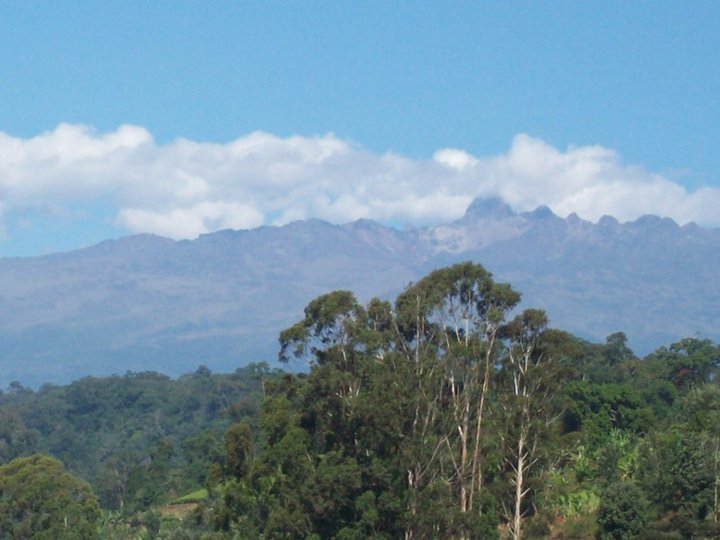
Mount Kenya is the highest mountain in Kenya and the second-highest in Africa, after Kilimanjaro. The highest peaks of the mountain are Batian (5,199 metres (17,057 ft)), Nelion (5,188 metres (17,021 ft)) and Point Lenana (4,985 metres (16,355 ft)). Mount Kenya is located in central Kenya, just south of the equator, around (150 kilometres (93 mi)) north-northeast of the capital Nairobi. Mount Kenya is the source of the name of the Republic of Kenya. Mount Kenya is a stratovolcano created approximately 3 million years after the opening of the East African rift. It was covered by an ice cap for thousands of years. This has resulted in very eroded slopes and numerous valleys radiating from the centre. There are currently 11 small glaciers. The forested slopes are an important source of water for much of Kenya. There are eight vegetation bands from the base to the summit. The lower slopes are covered by different types of forest. Many species are endemic to Mount Kenya such as the lobelias, the senecios and the rock hyrax. An area of 715 square kilometres (276 sq mi) around the centre of the mountain was designated a National Park and listed as a UNESCO World Heritage Site in 1997 http://whc.unesco.org/en/list/800. The park receives over 15,000 visitors per year.
Introduction

The Save Mt. Kenya Forest from Extinction Group
is a self- help organization based in the Gitogoto Village, Nthambo location, Magumoni Division of Meru South District, located in the country of Kenya. The group was started in March 2005 and was registered with the Government of Kenya in 2007 under the Ministry of Gender, Sports, Culture and Social Services. Currently the group has 46 active members from both inside the Gitogoto village and outside its borders. The group has been able to partner with few groups involved in tree planting activities and reforestation programs with an aim of expanding programs. Our Prior to formation of our organization, many members witnessed massive destruction of the land through various illegal activities. These activities ranged from firewood collection, post harvesting, logging, charcoal burning, to destruction as a result of the shamba systems.
Kenya’s shamba or Tongya system is a form of Agroforestry, where farmers are encouraged to cultivate primary crops (maize, bananas, beans and cassava) on previously clear cut public forest land on the condition that they replant trees. Since the mid 19th century, Kenya adopted this system to establish tree plantations by means of cheap or totally free labor, in order to meet the demand for timber.
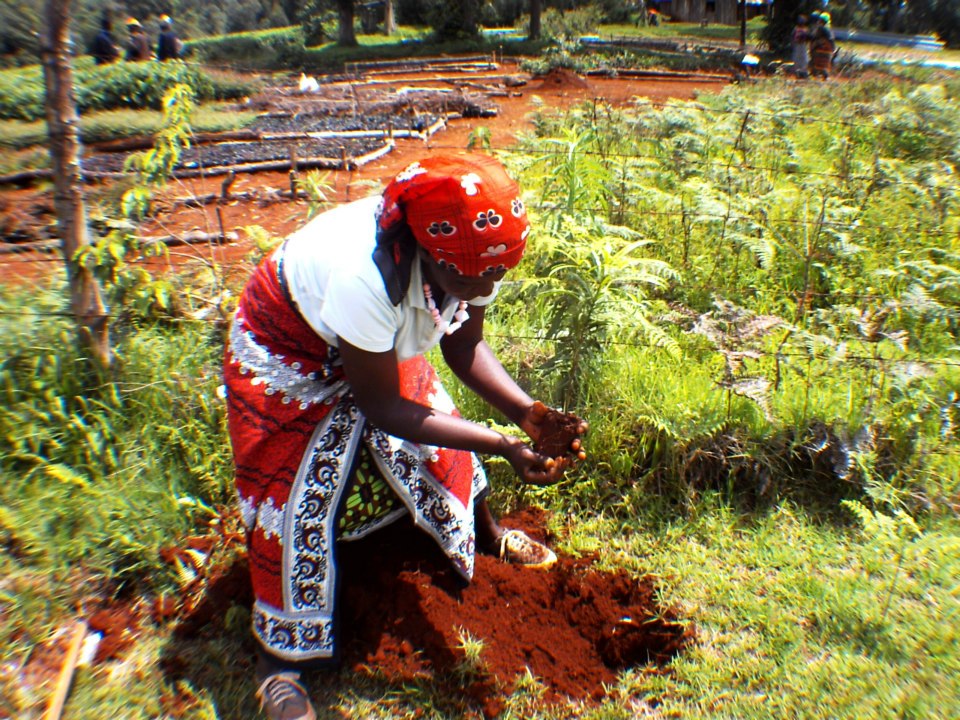
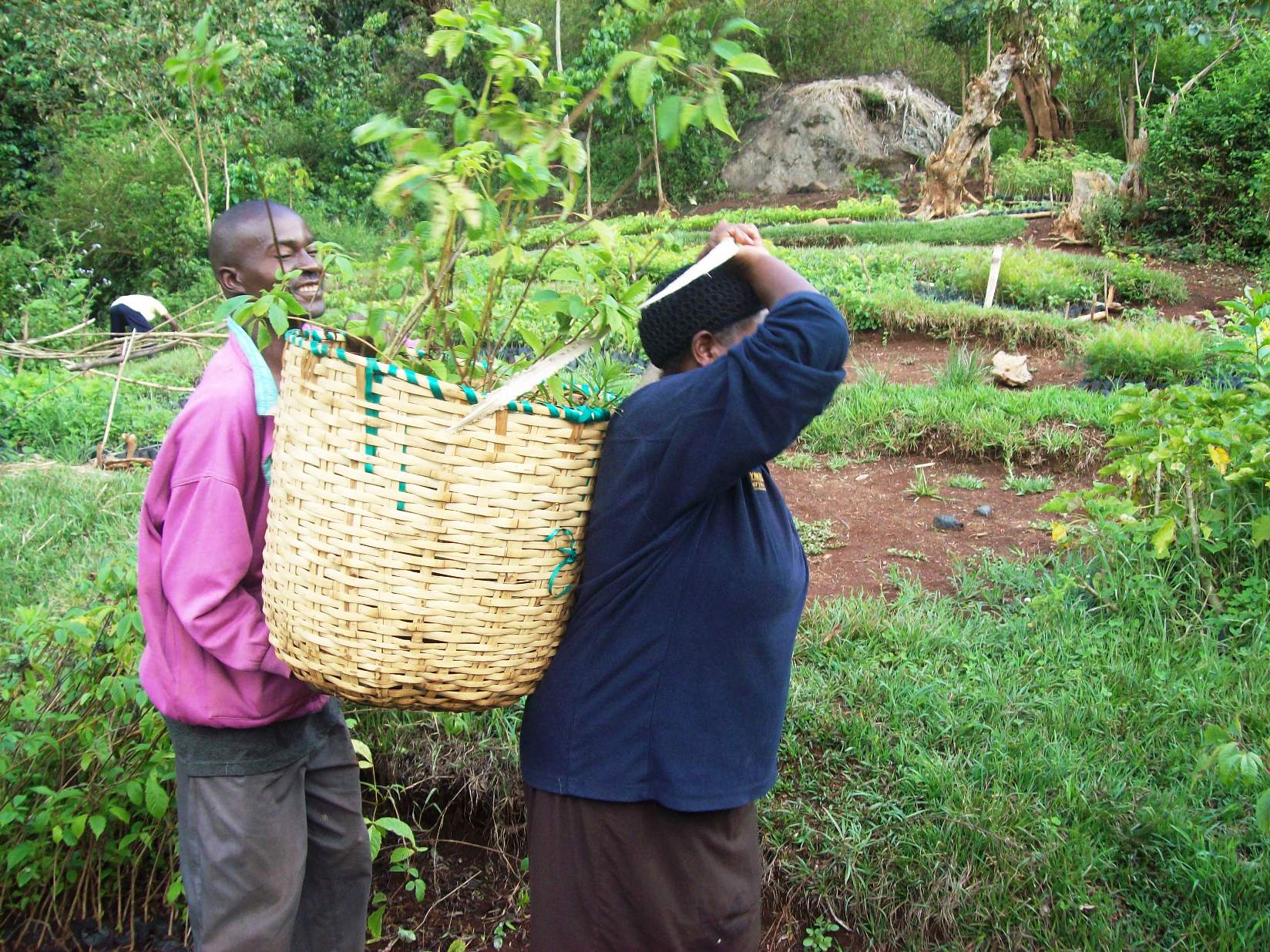
Member working in the nursery.
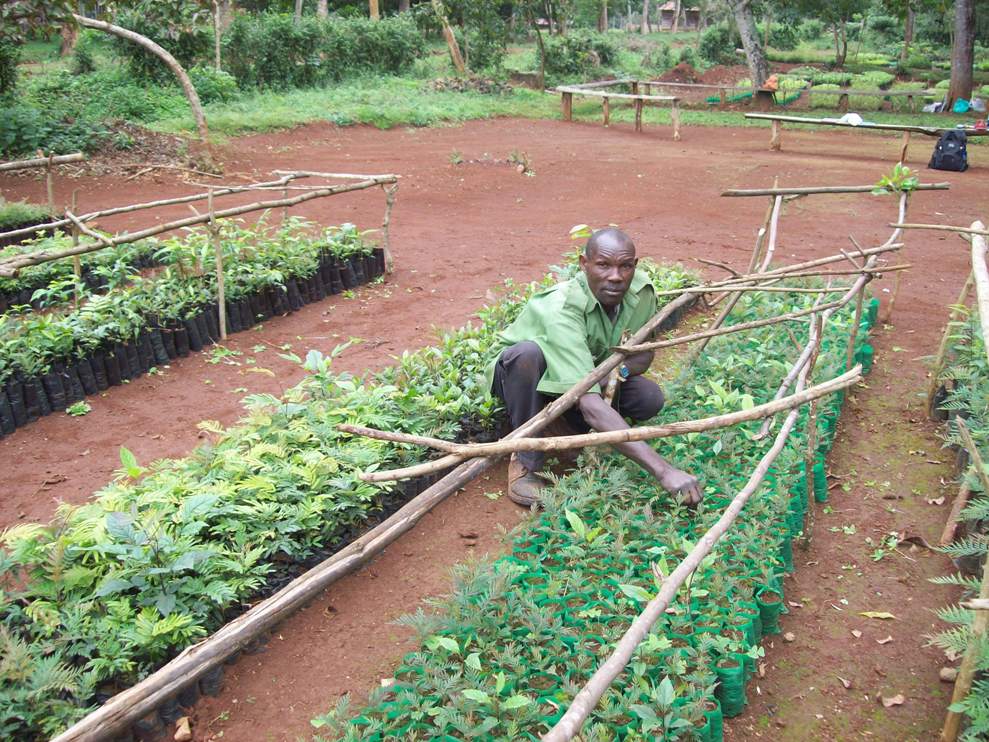
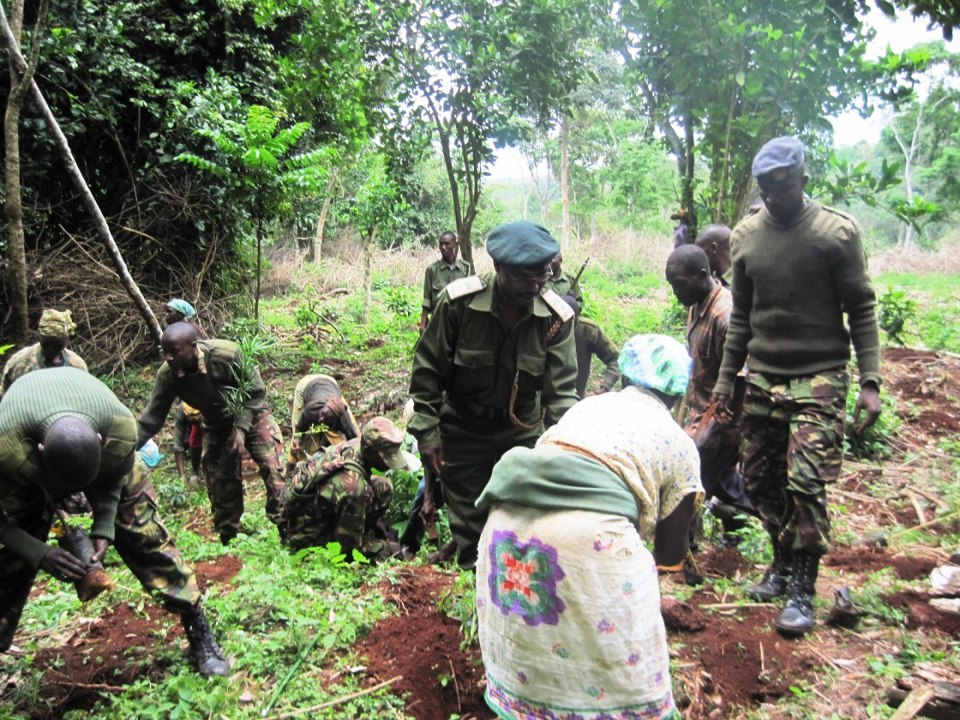
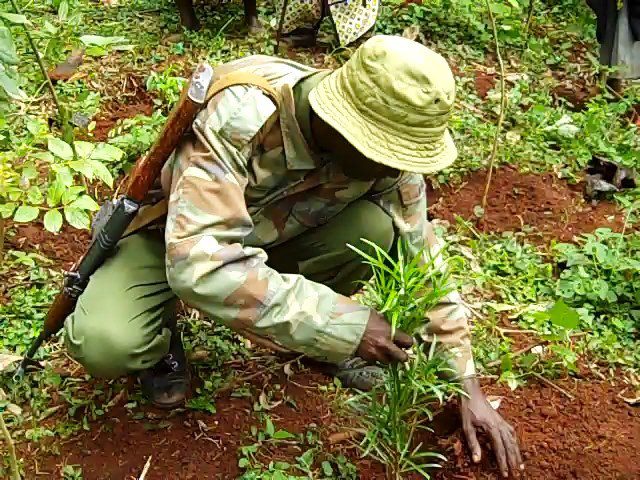
Excellent job for military officers in tree planting activities inside Mount kenya forest.
The shamba system, which in theory seeks to involve landless communities in forest conservation, has been steeped in controversy in Kenya for a long time now. By the early 1980’s, many problems associated with the system started emerging. An estimated 19% of Shamba systems were encroachments on natural forests.
Besides being open to abuse, critics believe the replacement of indigenous forests with exotic tree monocultures create negative effects. The most common exotic species planted in public forests include eucalyptus and cypress. Those plantations established under a monoculture regime interfere with the forest biodiversity, and reducing its water catchment qualities.
The reduction of water catchment creates its own negative results. Under the present government, farmers have been told to keep off indigenous forests. The Nobel Peace Prize laureate Prof. Wangari Maathai contends that, “We cannot sacrifice indigenous forests at the expense of exotic plantations. Plantations represent a monoculture of trees, but a forest is an ecology system”. Maathai affirmed, “We are destroying local biodiversity and greatly reducing the capacity of the forests to be effective water reservoirs”.
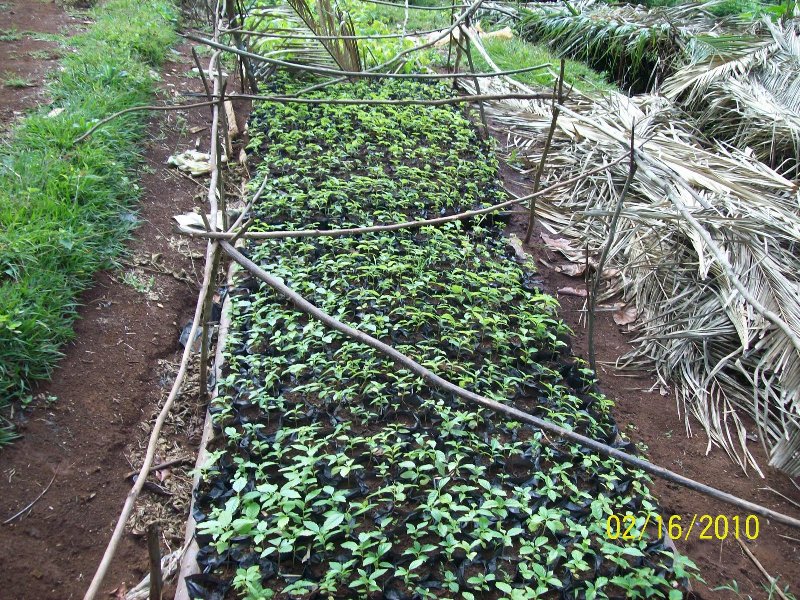
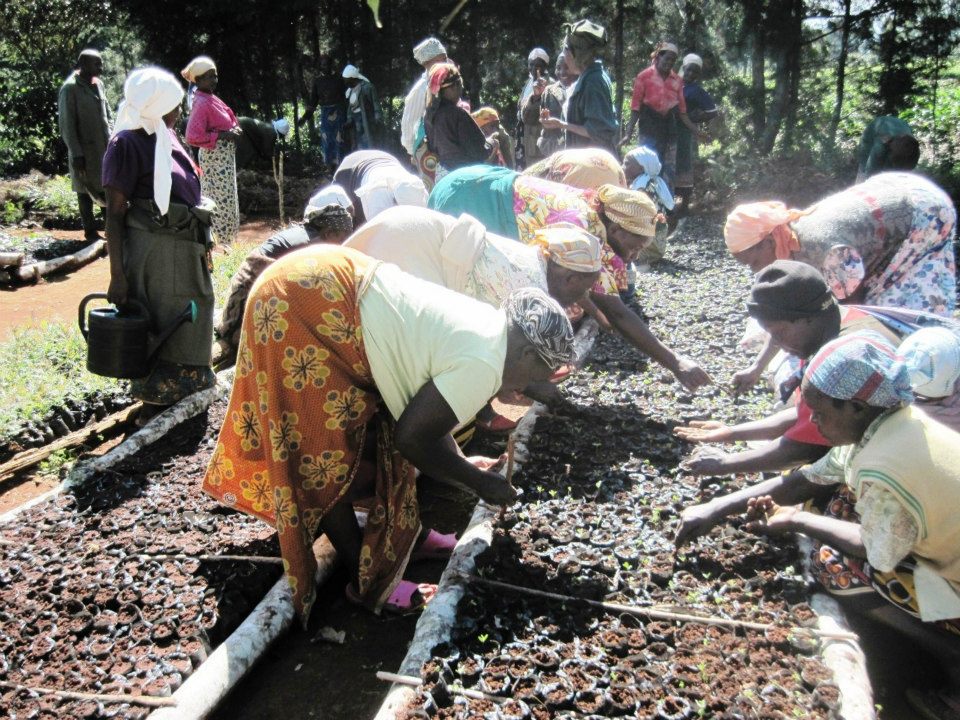
Tree seedlings in nursery.
The group is working hard to reshape practices which have globally proved to be socially, economically and environmentally harmful; and to undertake reforestation. All activities are designed to instruct and enlighten, and to promote environmental conservation awareness of those living near Mount Kenya forest and the surrounding area. Community members living near the forest are delegated the duty of helping to insure all who use the forest act in a manner conducive to safe, and productive usage of the natural resources. In addition to self policing activities, land pressure is used to help curtail land encroachment. Many problems have risen as people search on forested land for space to farm. Our group helps encourage sustainable land management through agro forestry technologies. We have many training exercises aimed at helping the community adopt new methods of farming. These methods will lead to increased food production, thus reducing the poverty level among community members. In addition, beekeeping is a major activity undertaken by the group. Community members are taught both the importance and the advantages of bees. Bees are good tree pollinators and reliable sources of income for the community.
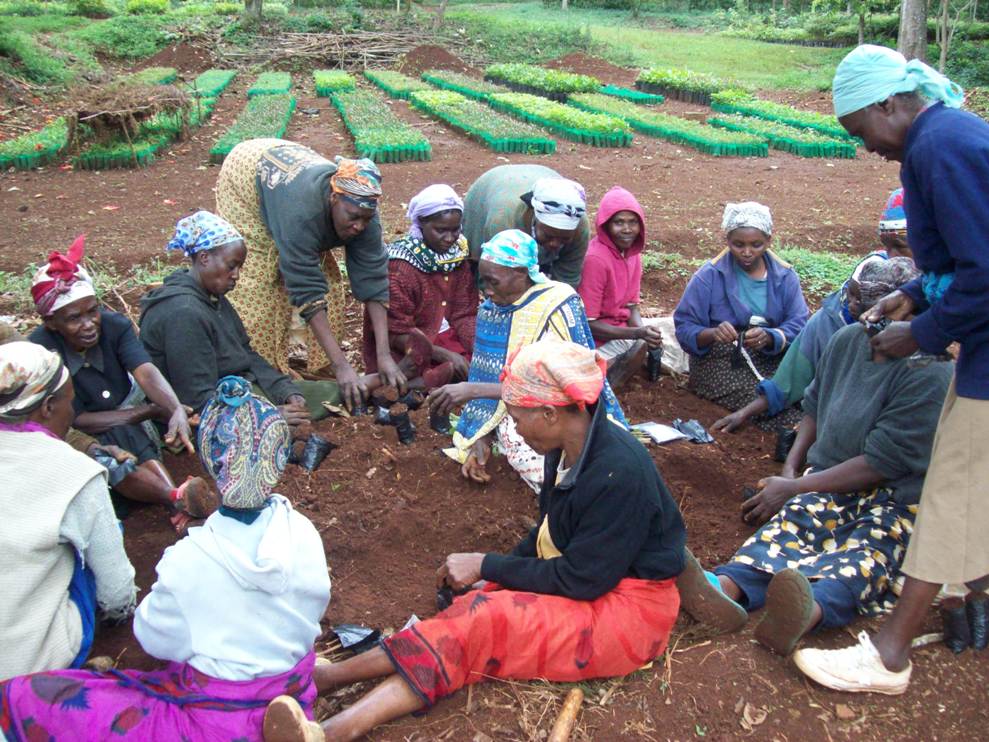
Puting soil in the polythene bags.
Problems being addressed by the group
since the group was formed, it has been involved with addressing the following problems:
I) Deforestation: Mount kenya has lost about 30% of its forest cover over the years through various illigal activities ranging from firewood collection, charcoal burning, timber harvesting and shamba systems
II) Decrease in water volume: Mount kenya forest acts as water catchnment areas for many rivers including Thuci, Ruguti, Nithi and Mutonga which have seen decrease in water volume due to loss of forest cover
III) Poverty : Most cummunities living in this area are poor due using unsustainable methods of farming.
IV) Food insecurity: poor methods of farming and storage of food has led to food insecurity in this area.
What we are involved with
We carry out reforestation of Mount Kenya forest through tree planting activities. The activities are in support of government of Kenya’s agenda to increase our forest cover from 2% to 10 %, which is an internationally required standard. Agro forestry technologies training aims to enlighten the community on the importance of integrating trees with cash/food crops, and to improve food crops production, through use of organic materials and nitrogen fixation trees. In addition, these methods promote environmentaly health source of energy. The positive by product is restriction from entering the forest, and determent of carrying out massive destruction. Environmental conservation awareness is aimed at incorporating community collaboration in forest conservation through tree planting, and understand the importance of viewing the forest as their natural heritage.
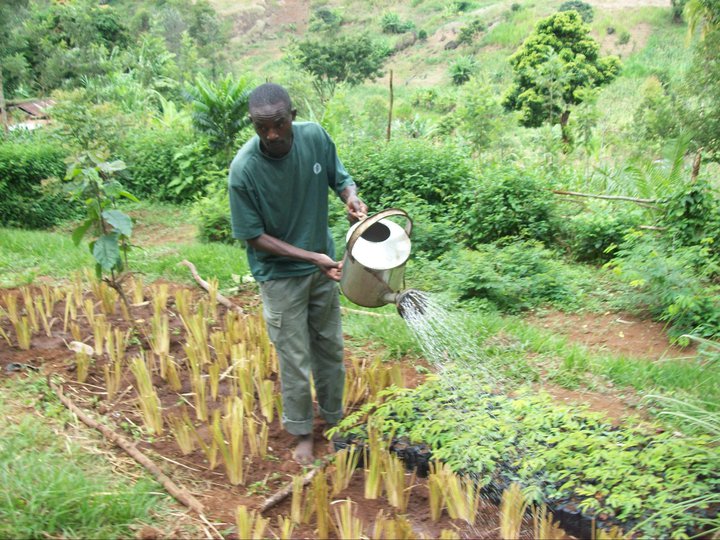
Member of Save Mount Kenya watering the seedlings
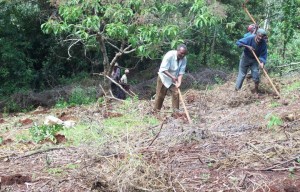
Community members digging holes for reforestation
Project objectives
Project undertaken
SMKFG and the newly registered non governmental organization Trees for the Future and Agroforestry Organization which has incorporated more than 15 groups from mount Kenya region is currently undertaking various activities which include;
-Establishing trees nurseries to raise seedlings which are then transplanted to Mount Kenya forest this being part of reforestation of all areas of Mount Kenya Forest which experienced deforestation in early years of 80s and 90s through various illegal activities such as charcoal burning, unlicensed logging, encroachments through Shamba systems. These areas never regenerated back after deforestation and our organization is involved in replanting them together with other organizations.
-Our organization is also involved in donating tree seedlings to various schools in the area which are either planted on schools compound or the pupils and students take them home and plant them on their farms.
-Agroforestry techniques trainings which is aimed at enlightening farmers on how to integrate trees with food crops. Many deforestation in Africa take place because most farmers don’t plant trees on their farms and end up encroaching forest lands looking for fuelwood, timber, building materials , fodder for livestock and forest products.
-Environmental conservation awareness ; our organization is undertaking environmental conservation awareness aimed at enlightening community members at large on the importance of protecting this importance ecosystem which is very vital to them in terms of source of water, tourist attraction and habitat for various animals and birds.
-Eco –School Program ; our organization has undertaken some trainings with various school from the area which is intended to train them on how to establish tree nurseries, manage the tree in the nursery and how to transplant them either in the school compound or at home. Our organization has also acquired a projector where we will be showing videos to school pupils on the destruction of forests and killing of wild animals for their trophies. We are in the process of acquiring a generator to facilitate this program.
-Cook stoves project: deforestation in most Africa countries is occurring due to high demand for fuelwood; most women in African countries spend a lot of time collecting fuelwood which don’t last long because they are used in open fire cooking. Our organization is working in partnership with other organization to provide women with cook stoves which reduces consumption of fuelwood. This program is aimed at reducing respiratory diseases related to open fire cooking, reduce green houses gases related to emission of carbon monoxide into the atmosphere, reduce time spent on forest collecting fuelwood as well as backache diseases related to carrying heavy loads of fuel woods
-Our organization is also involved with livelihoods improvement programs like beekeeping for purposes of harvesting honey and wax, we are also contemplating fish farming as well as growing nutritional trees like Moringa oleifera which will reduce cases of malnutrition among old people , pregnant mothers and young children’s.
In our undertaking, our organization is working in partnership with the department of forestry i.e. Kenya Forest Service which guides us as we undertake reforestation programs in Mount Kenya forests. We also work with various Ministries like the Ministry of Agriculture and Livestock when we undertake trainings either in agroforestry and livestock development.
Future program
Eco–tourism: our organization is intending to start an eco tourism project which is aimed at improving the livelihoods of the community where we are currently undertaking our projects for purposes of supporting these projects and also learning more about the culture of the people, way of live, daily activities undertaken in the community and many more other things. The visitors will have an opportunity to interact with community members, participate in various activities, visit some of the nearby institutions we are currently working with, go camping, bird watching, visit some tea processing factories to familiarize themselves on how tea processing take place, undertake fishing activities. These activities will be undertaken in Mount Kenya area.
Our organization is in the process of launching a tree planting activity in Masai Mara as well as reforestation of Mau Forest, there will be also an eco-tourism project where the visitors can meet the Masai Moran, go on camping, bird watching, visit elephant breeding area where the elephant assemble to give birth, get an opportunity to see the big five which are Elephants, Lion, Buffalos, Rhino and Leopards. The program will support reforest this Itong Hill which has experienced massive deforestationOur program aims to
• Educate and empower the community concerning the environment and their rights through seminars and training, which are undertaken every two months.
• Improve healthcare through use of medicinal plants.
• Prevent avoidable deforestation through formation of community forest policing. These activities are aimed at making sure that each and every person participate in tree planting activities, and report any illegal activities taking place inside the forest.
• Restore Mount Kenya Forest through tree planting activities, and improve this important ecosystem, and habitat for birds and animals.
• Raise the incomes of rural Kenyans, especially those most vulnerable members, through activities such as beekeeping, horticultural and income generating activities.
• Provide food security and energy security through use of agro forestry technologies such as live fences, firebreaks, alley cropping, forest gardens and contours to prevent soil erosions.
• Improve access to clean water through protection of water catchment areas, by planting trees along river banks and water sources.
• Wildlife Conservation and multiplication of endangered species by planting more trees in wildlife habitats, this will create breeding places for birds and animals.
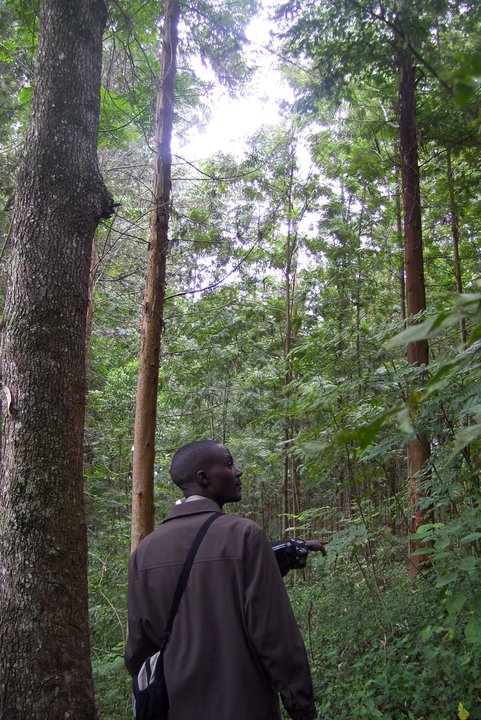
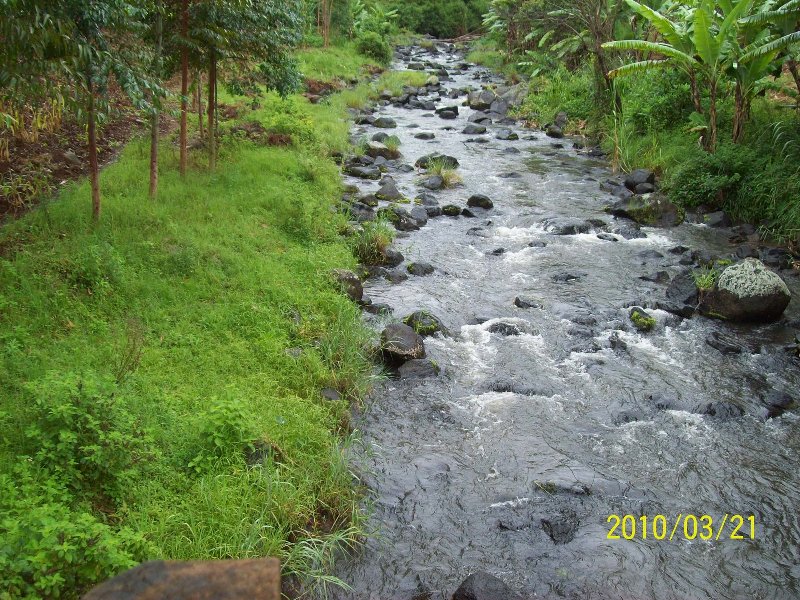
Thuci river seedlings transplanted
]
Save Mount Kenya Forest from Extinction Group ©
Paulino Mugendi Damiano,
coordinator.
Save Mt Kenya Forest From Extinction Group.
P.o. Box 29669 Post Code 00100,
Nairobi. Kenya.
www.save-mount-kenya-forest.
Email: paulino@globalbiodiversityprotection.org
Email: info.mtkenya@gmail.com
http://facebook.com/